Albany Museum
Project Details
Location: Albany, Texas
Project Type: Museum
Expertise: Civic & Cultural • Museum
Status: On the Boards
Architect: Jeff Garnett Architect
Overview
The Buffalo Hunters and Buffalo Soldiers of Fort Griffin Museum is a new cultural landmark in Albany, Texas, dedicated to preserving two parallel histories that helped shape the American West. Through immersive exhibits, authentic artifacts, and educational programming, the museum explores the intertwined legacies of the Buffalo Soldiers and buffalo hunters—two distinct groups whose lives converged on the Texas frontier. More than a place for exhibition, the museum was conceived as an enduring civic institution where architecture, history, and community come together to foster education, reflection, and public dialogue.
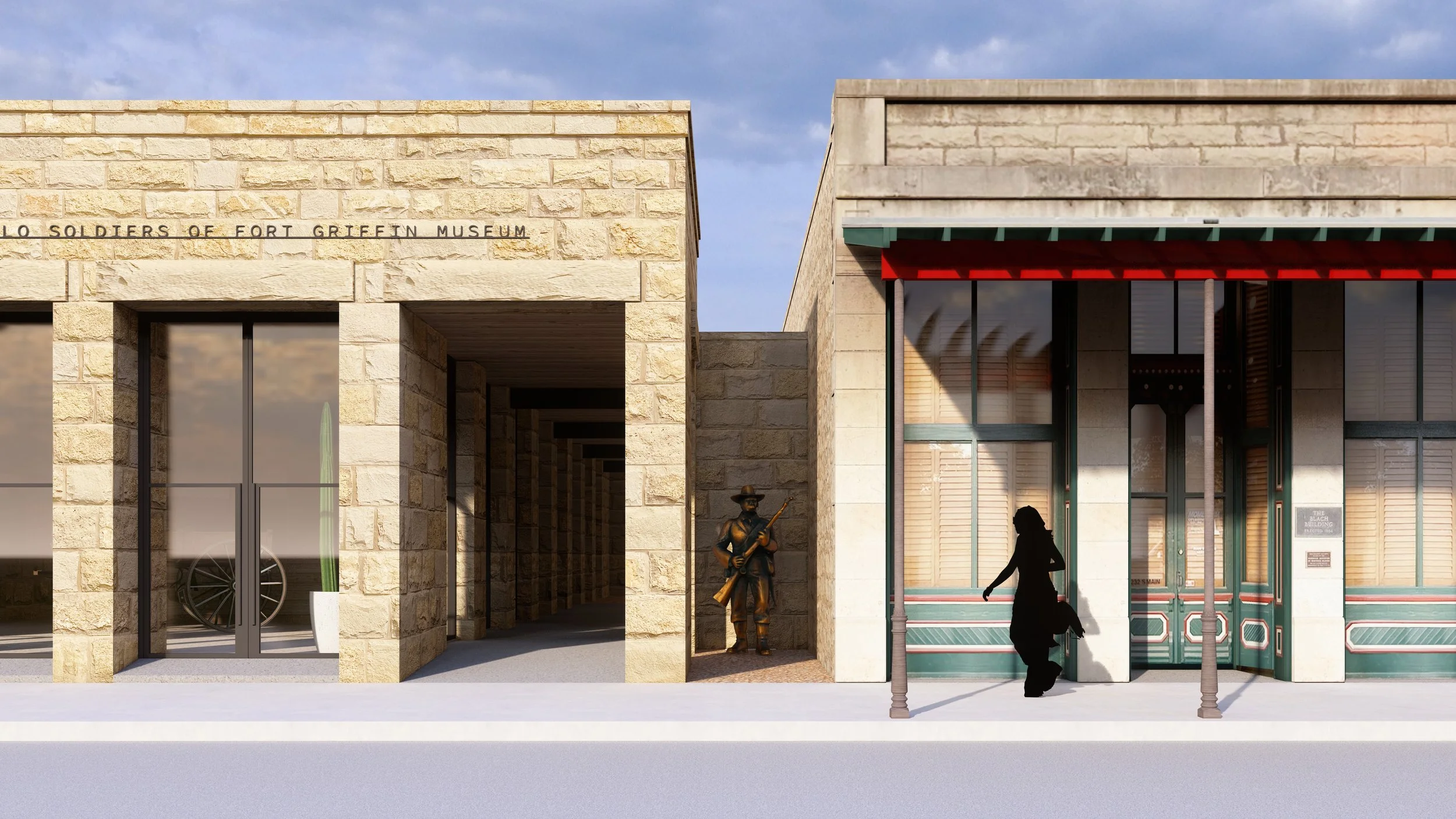
A New Landmark for Historic Albany
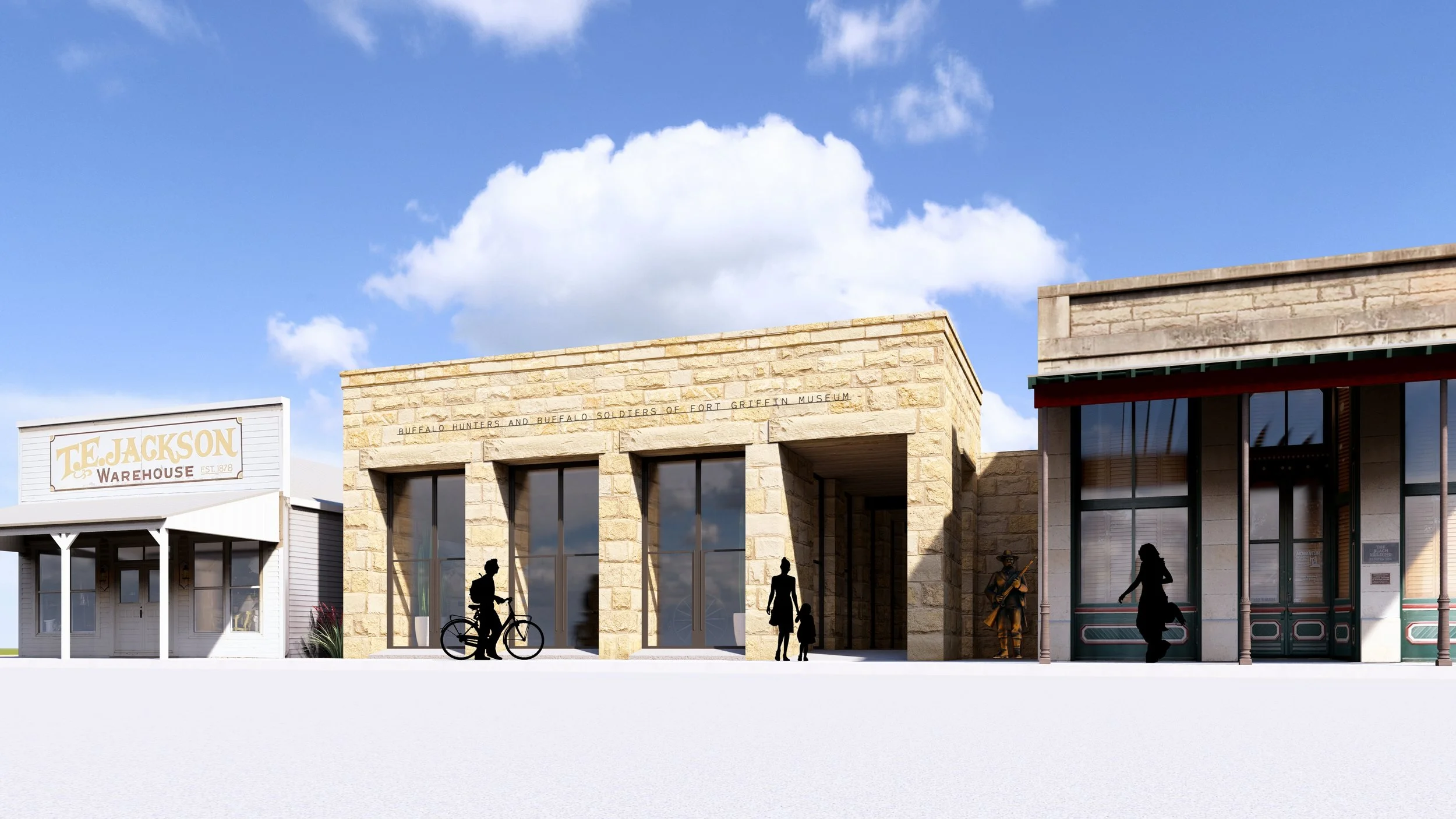
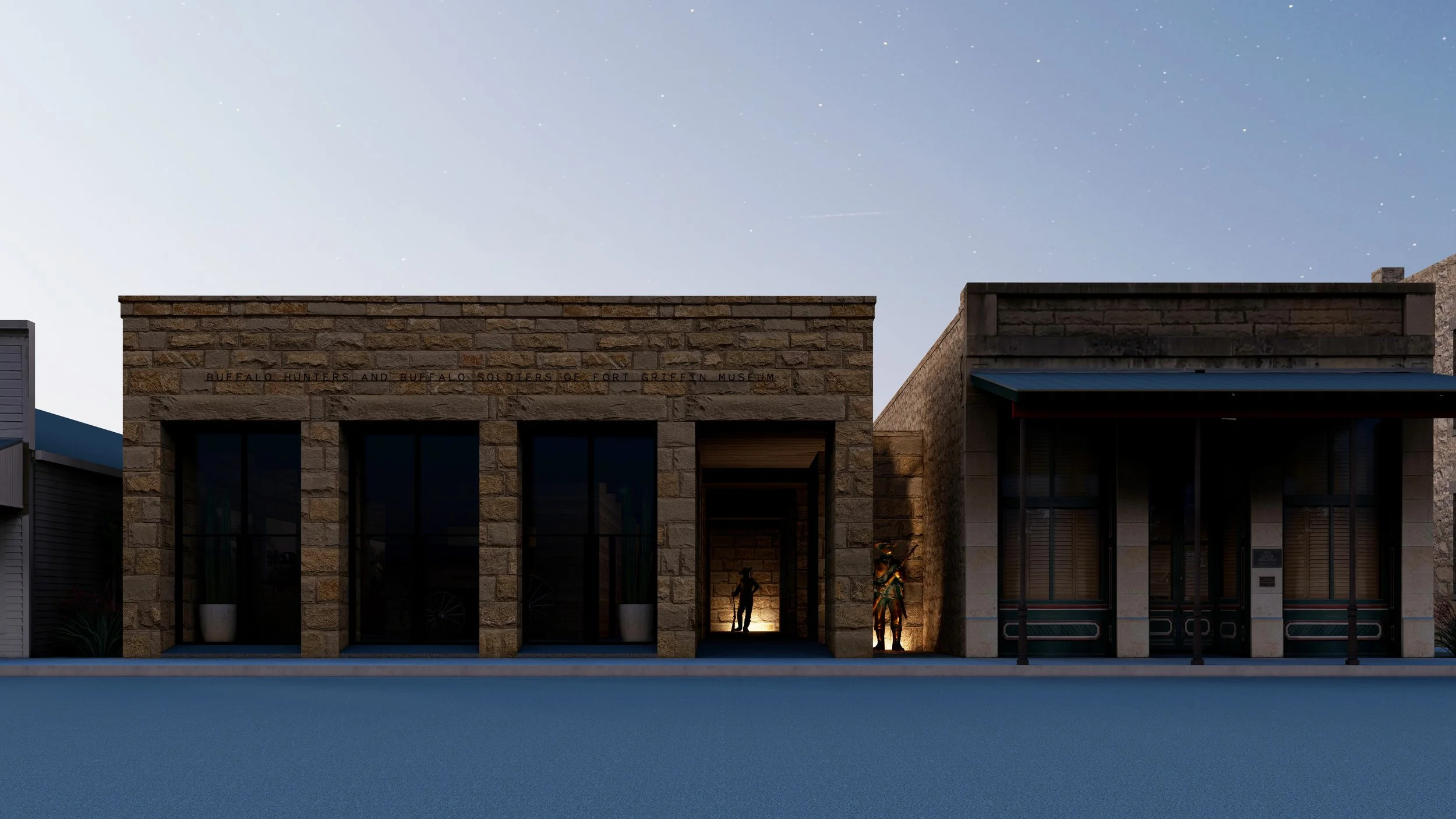
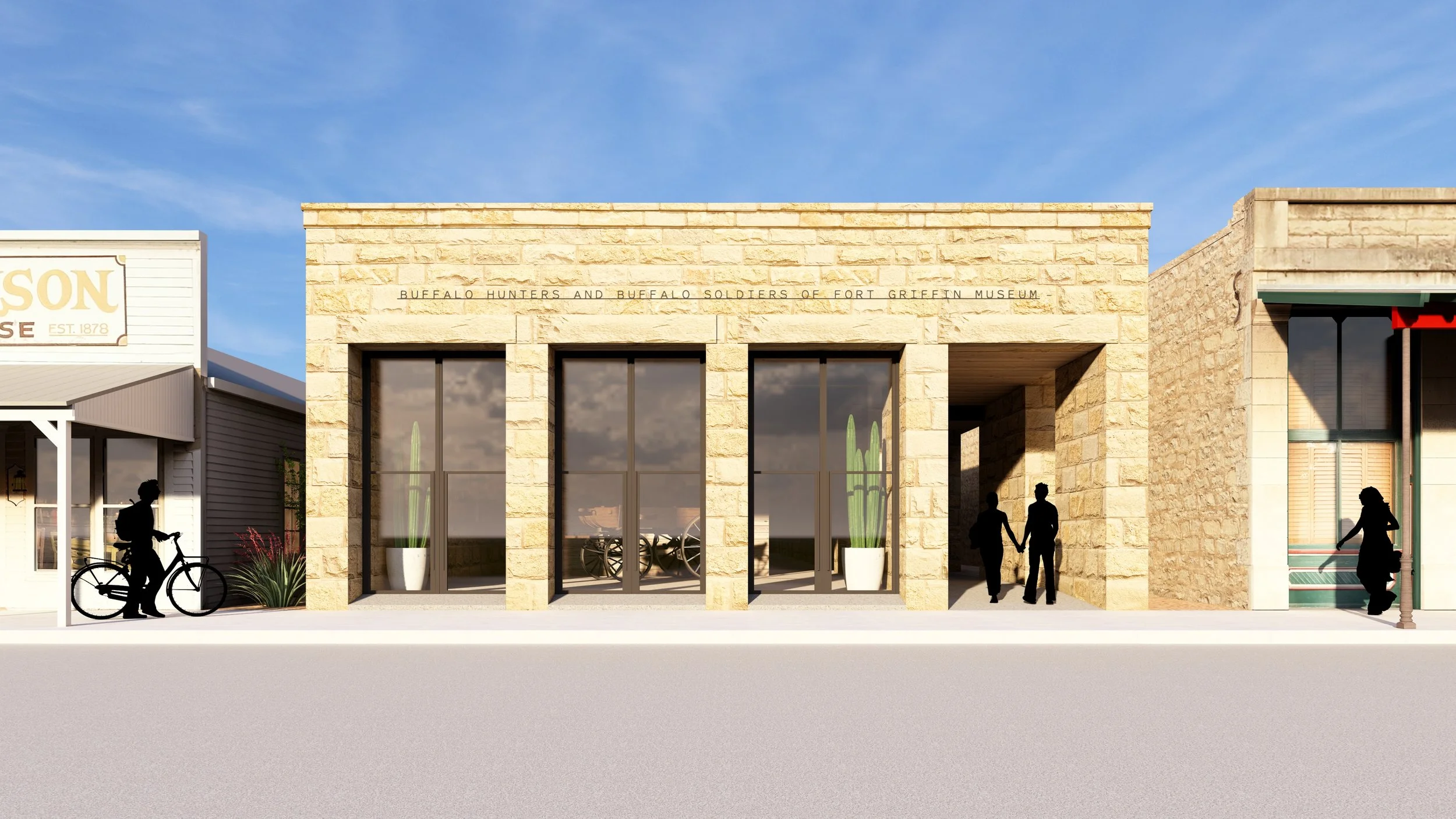
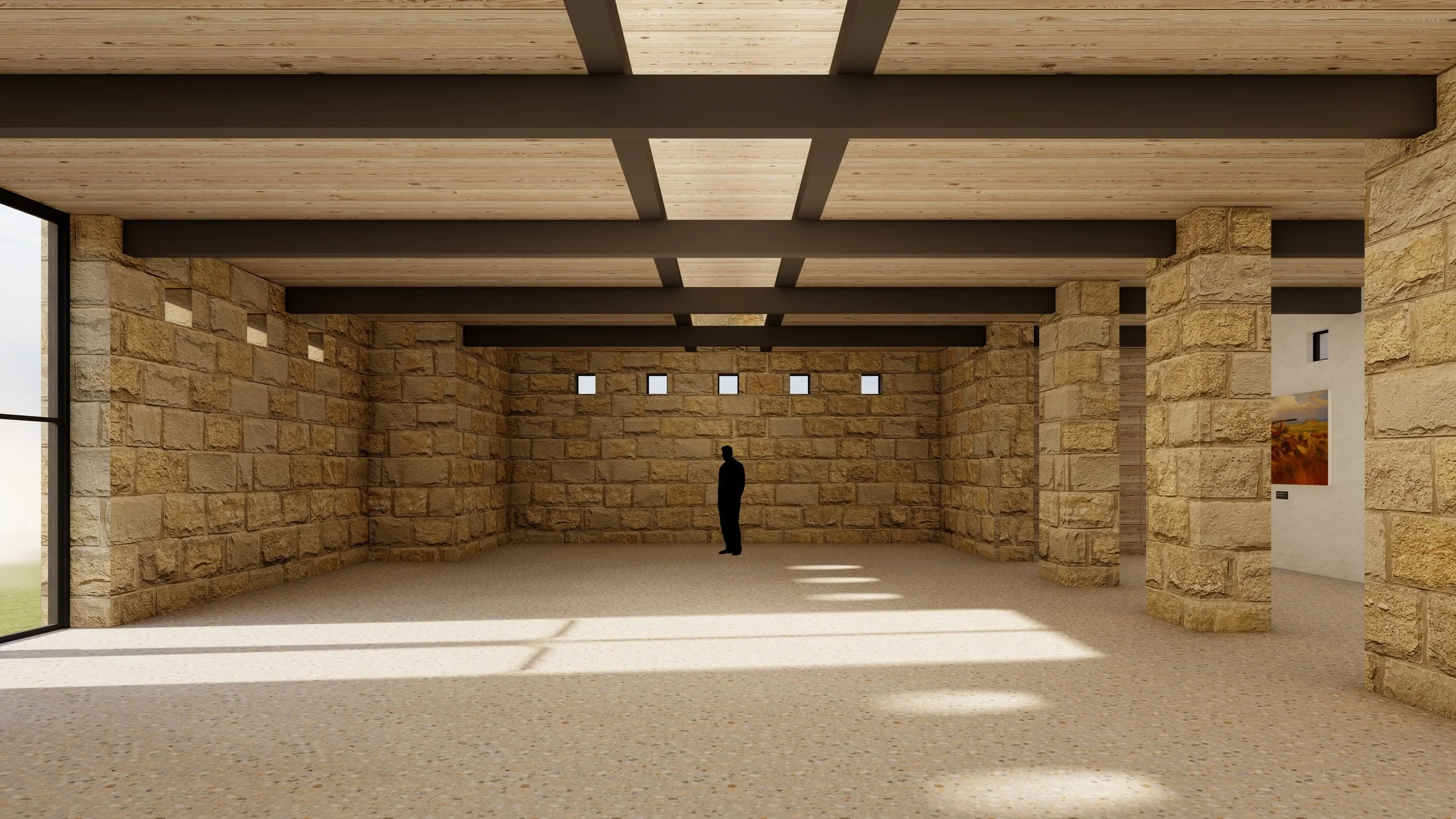
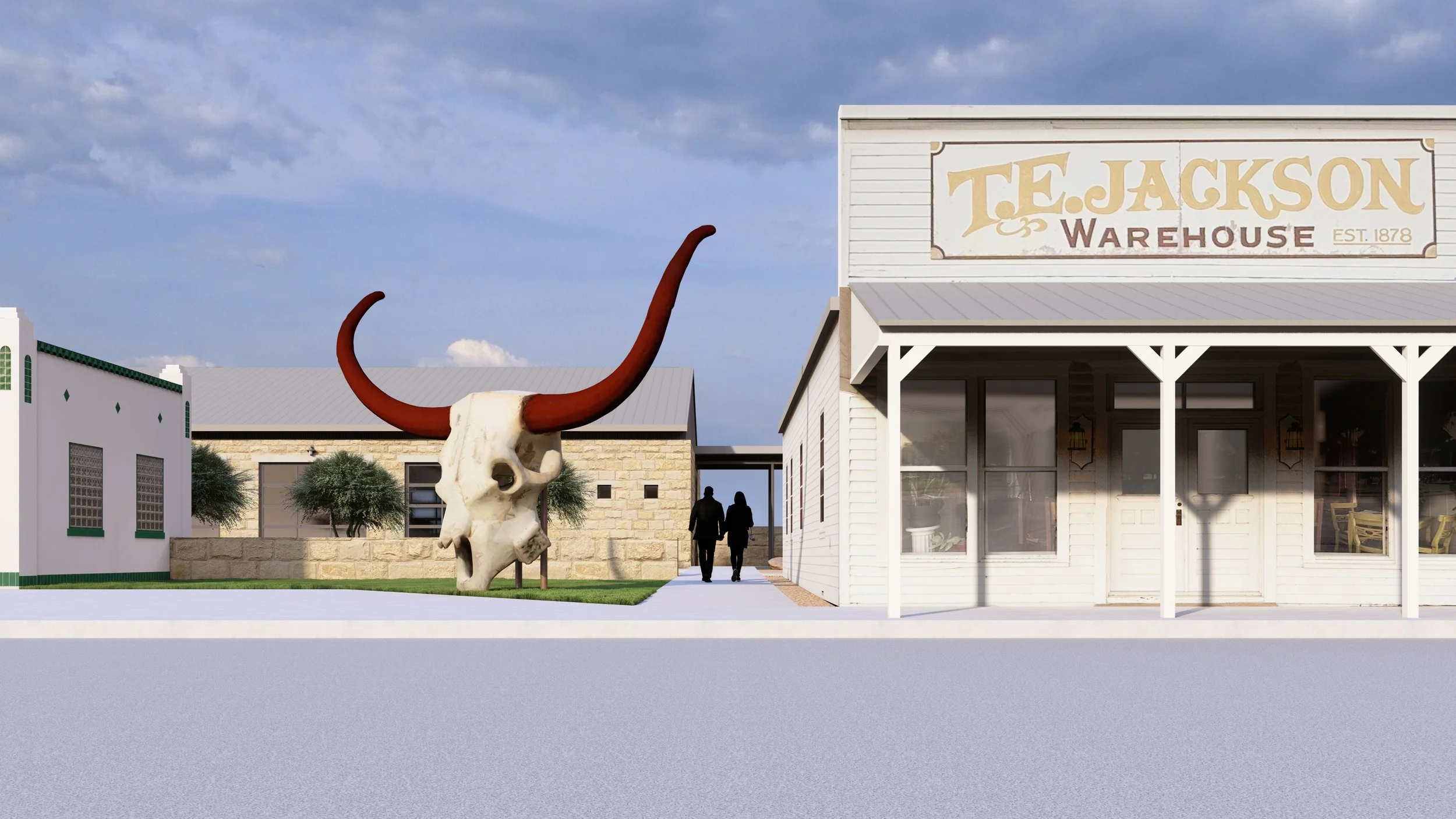
Located in the heart of Albany's historic downtown, the museum occupies a long-vacant infill site adjacent to the historic T.E. Jackson Warehouse. Rather than competing with its surroundings, the design reinforces the architectural rhythm of Main Street through careful proportion, restrained detailing, and the use of locally quarried limestone. The building establishes a meaningful civic presence while respecting the scale, craftsmanship, and character that define Albany's historic district.
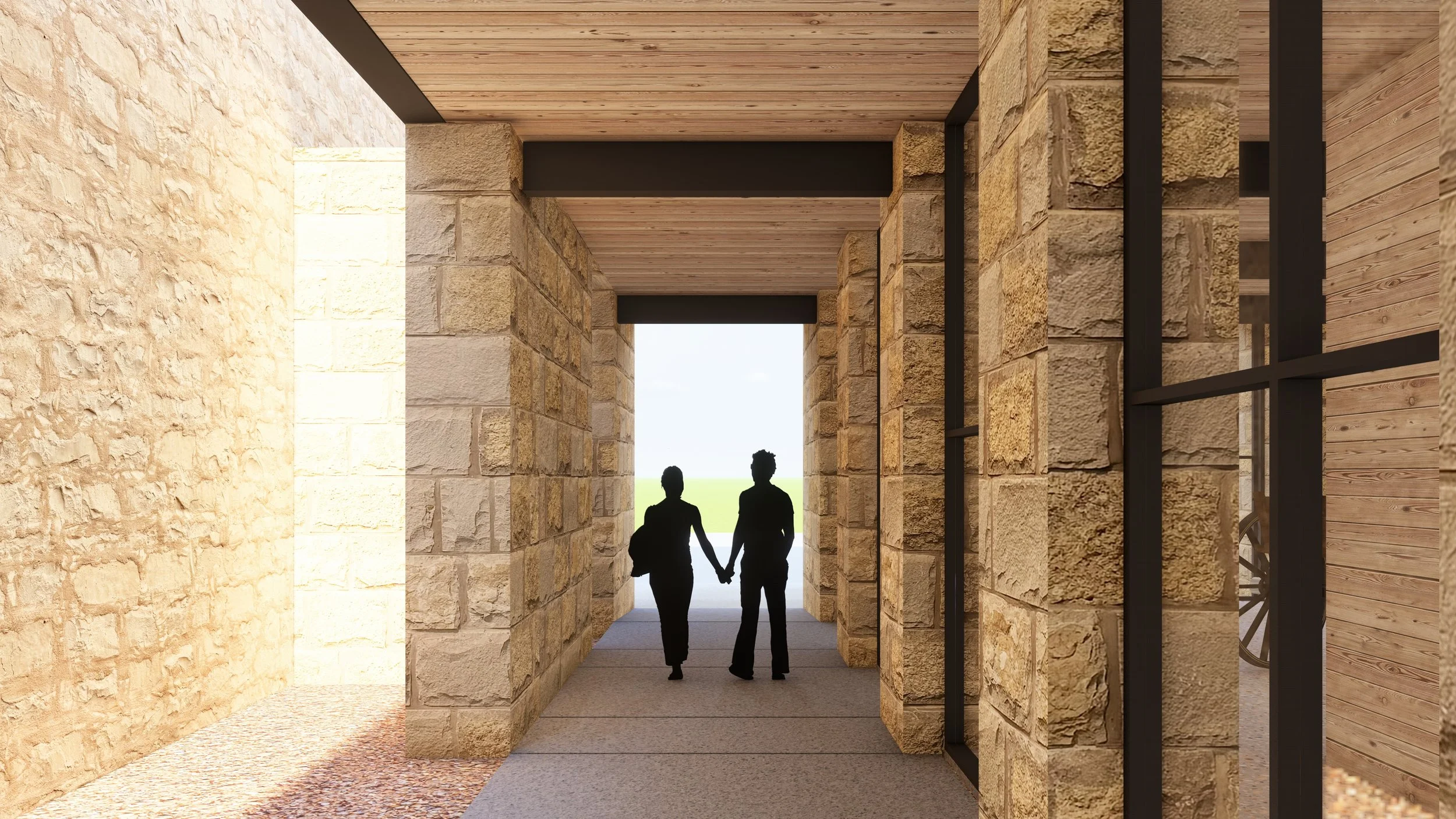
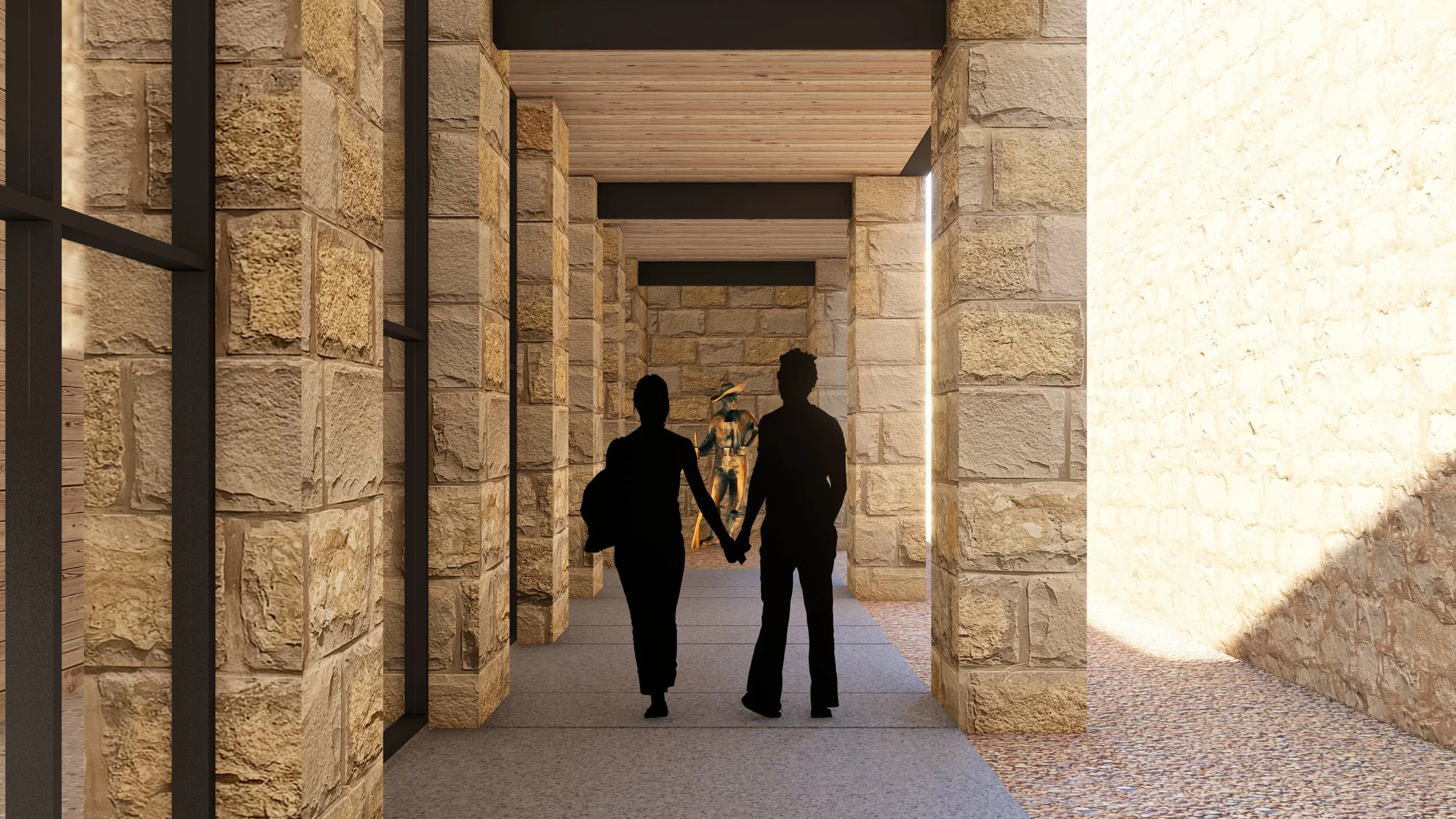
Architecture Rooted in Place
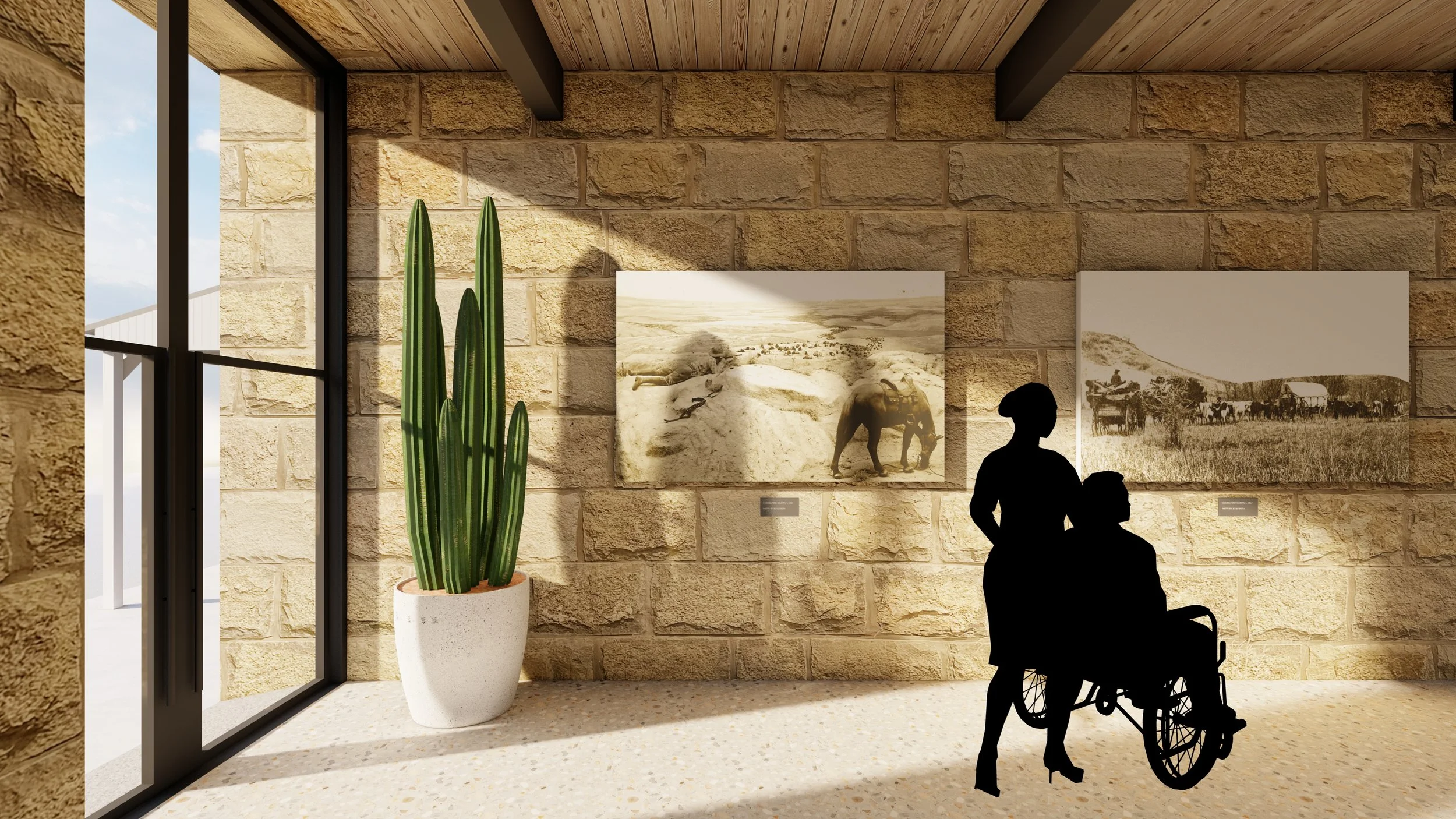
The museum embraces a restrained architectural language that responds thoughtfully to its historic surroundings without imitating the past. Familiar materials, simple forms, and carefully proportioned openings create a quiet dialogue between old and new. Every design decision was guided by a commitment to context, allowing the building to complement its setting while establishing its own identity as a contemporary cultural institution.
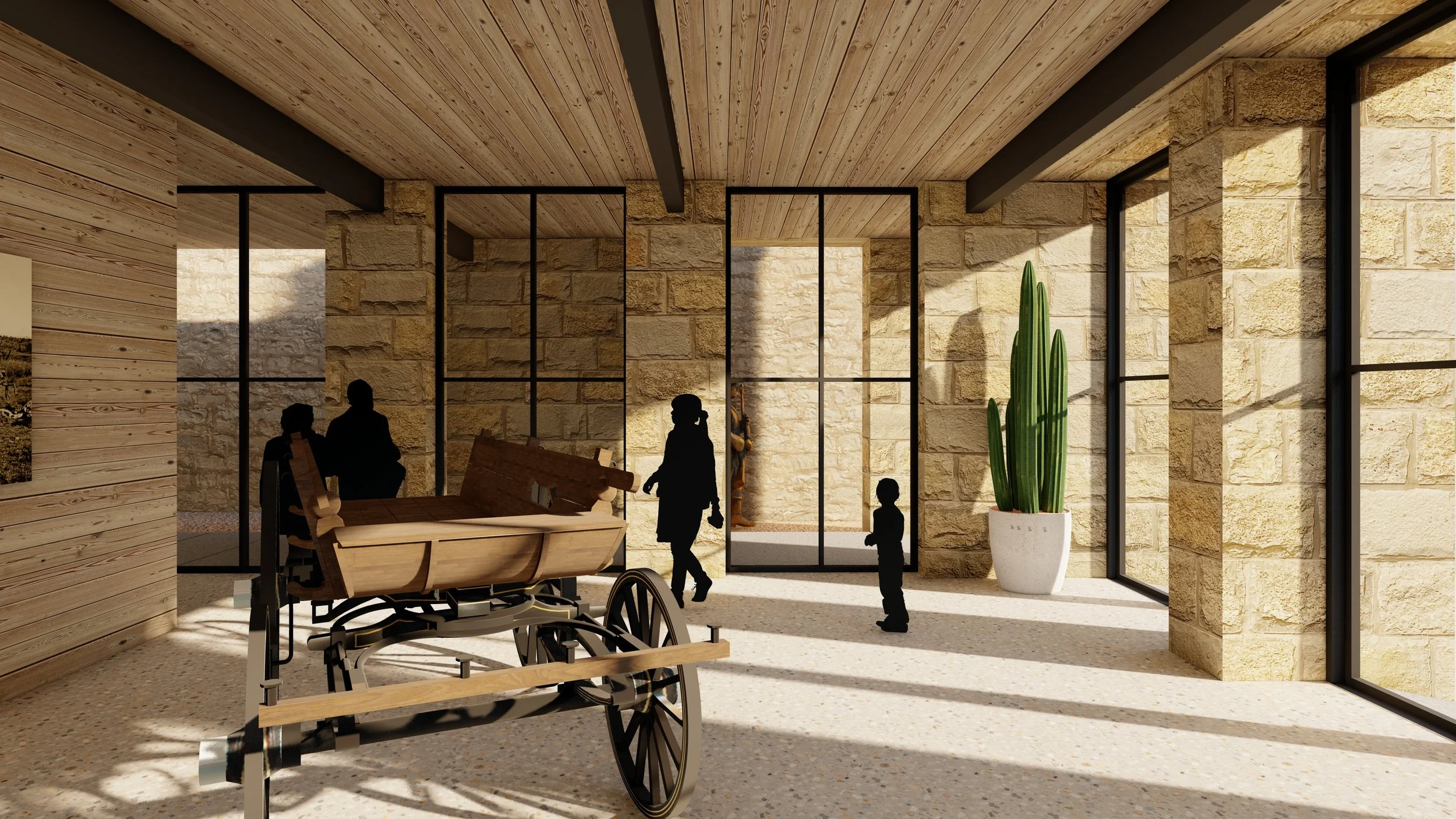
Arrival Through Discovery
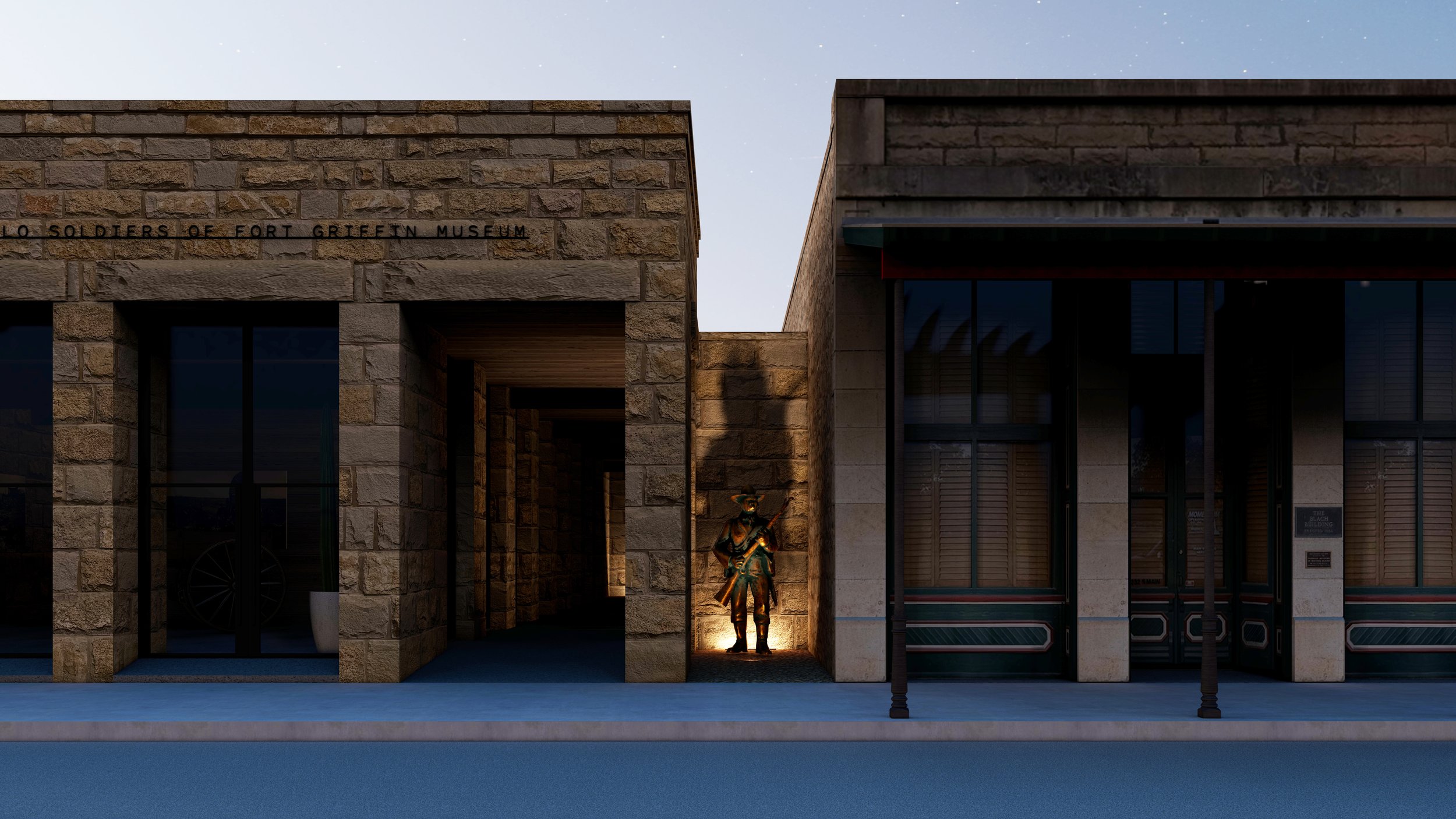
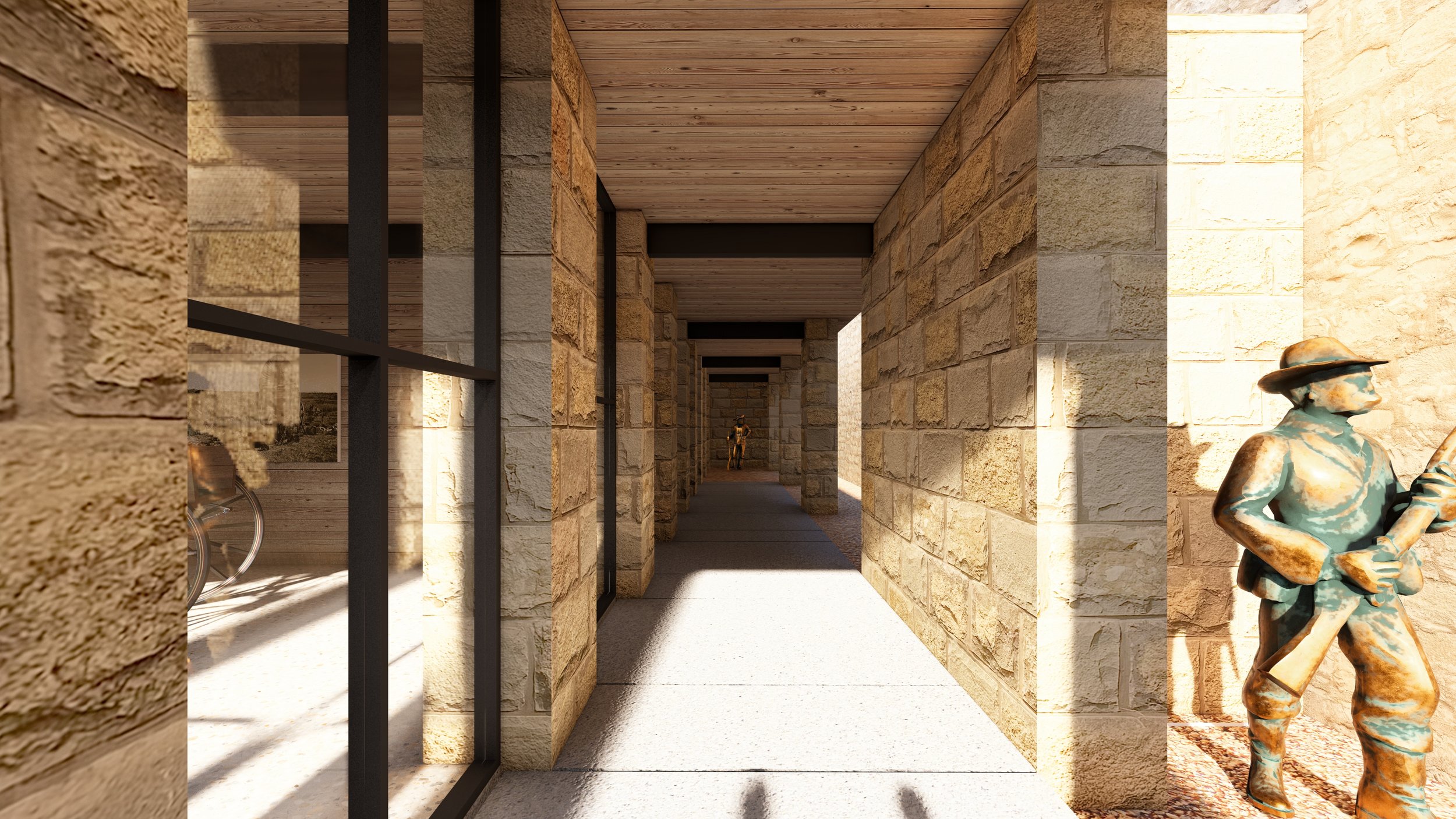
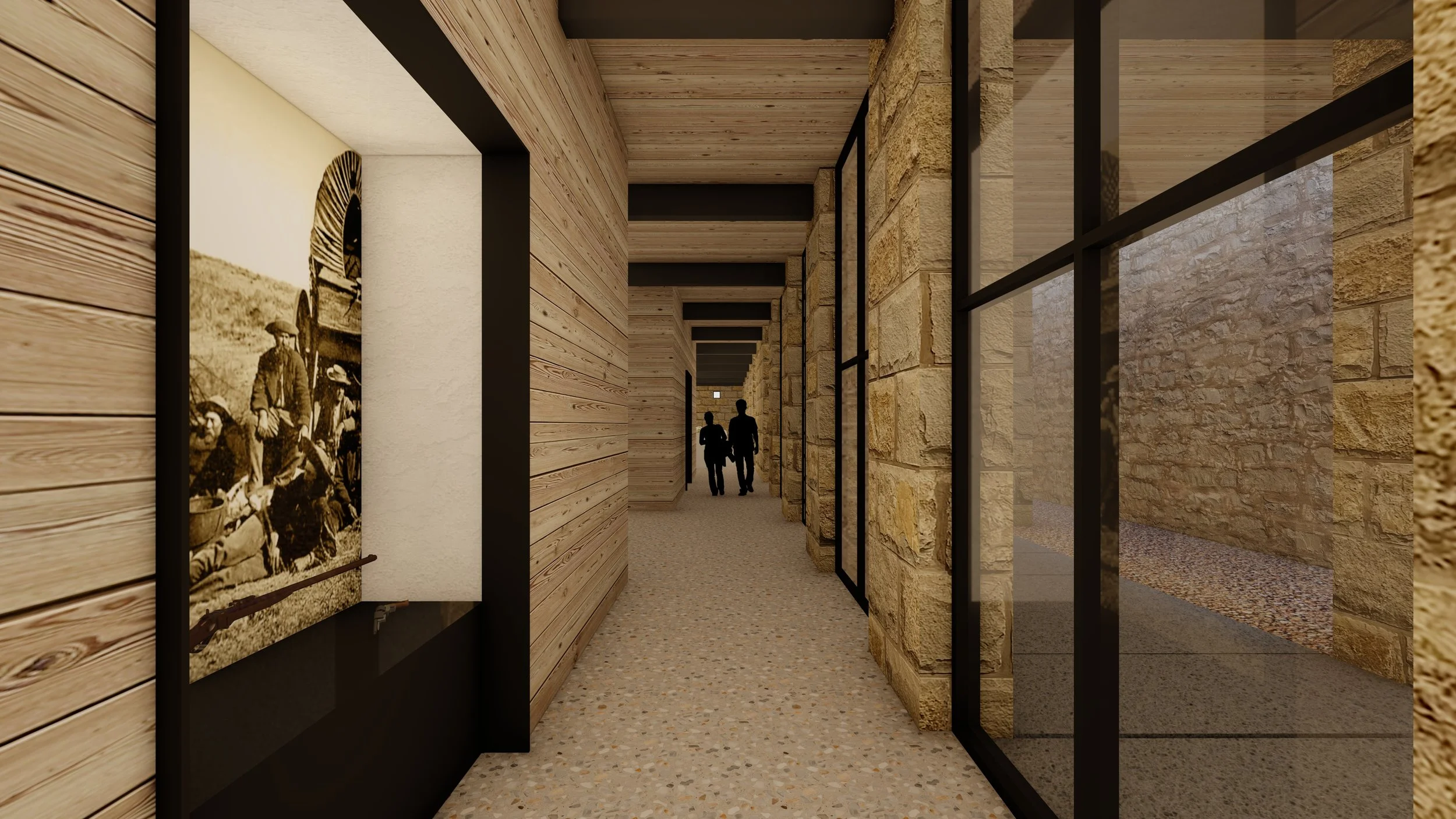
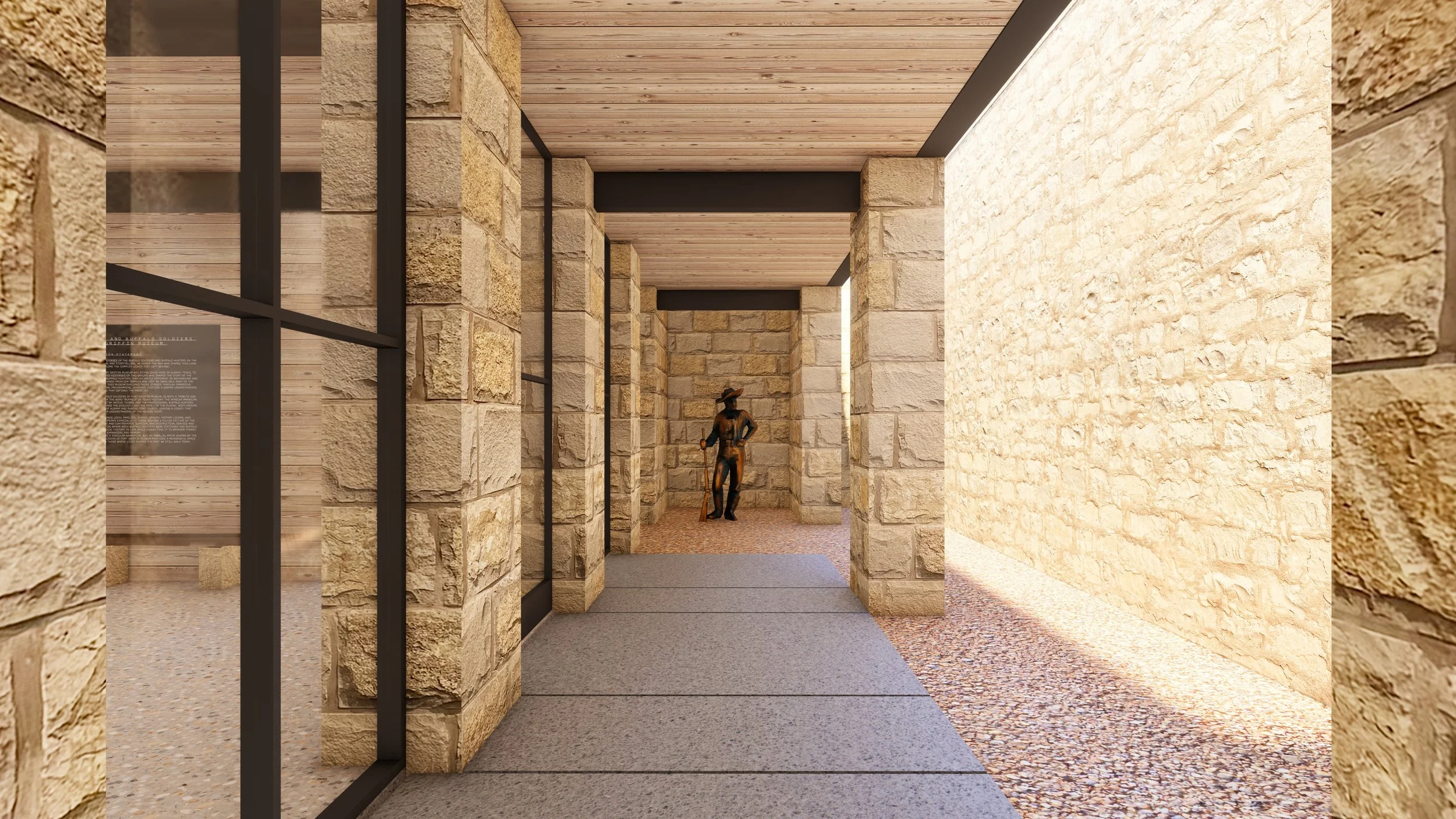
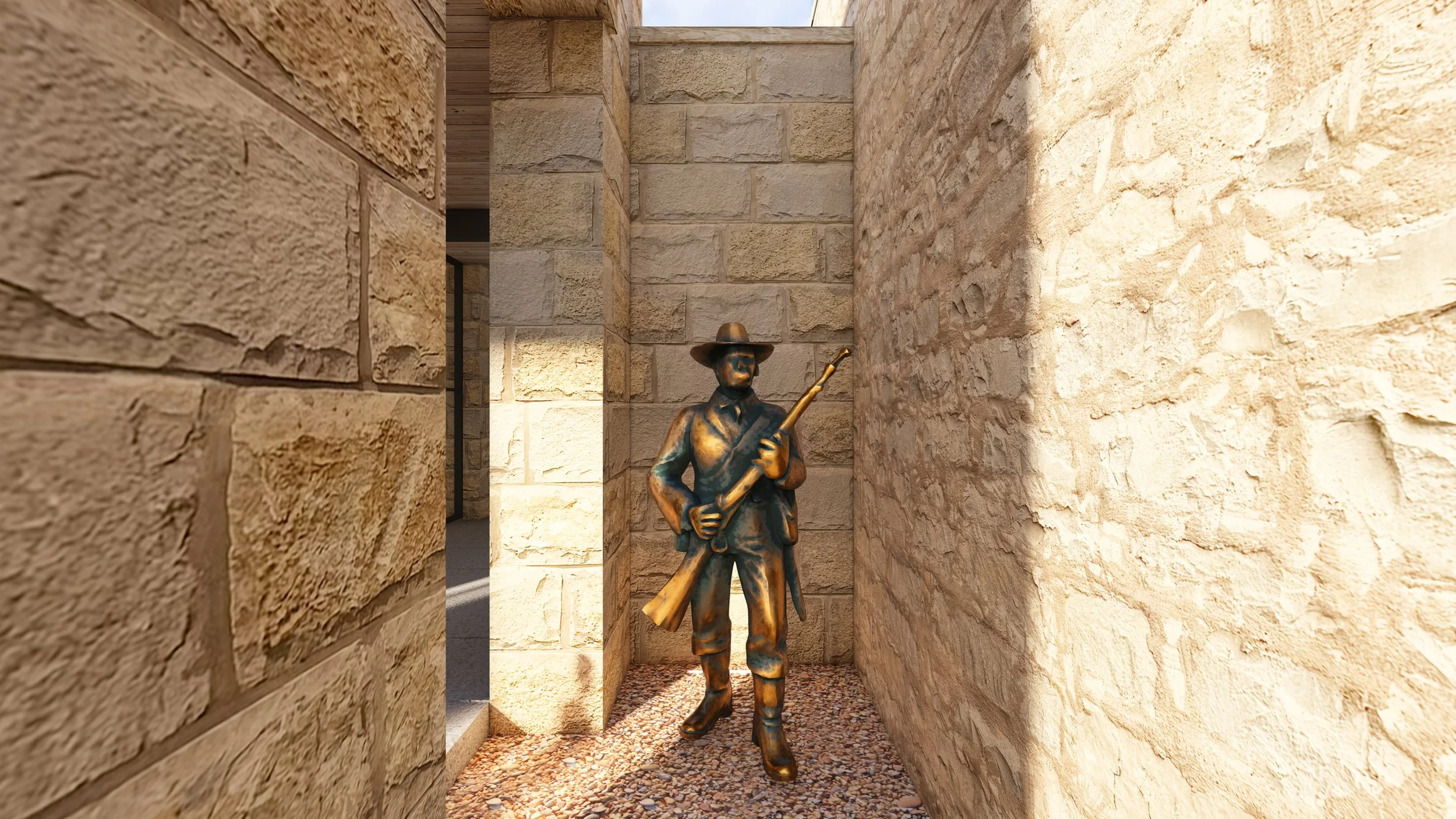
Visitors approach the museum through a carefully choreographed entry sequence that gradually transitions from the activity of Main Street into a quieter, more reflective environment. Limestone walls, filtered daylight, and framed views slow the pace of arrival before visitors enter the galleries, reinforcing the museum's role as a place for learning, remembrance, and contemplation.
Honest Materials
The museum is defined by a restrained palette of locally quarried limestone, exposed structural steel, glass, and natural wood. Selected for their durability and authenticity, these materials create a sense of permanence while reinforcing the character of the Texas frontier. Rather than relying on decorative historical references, the building expresses its identity through craftsmanship, proportion, and thoughtful detailing.
Interpreting Two Histories
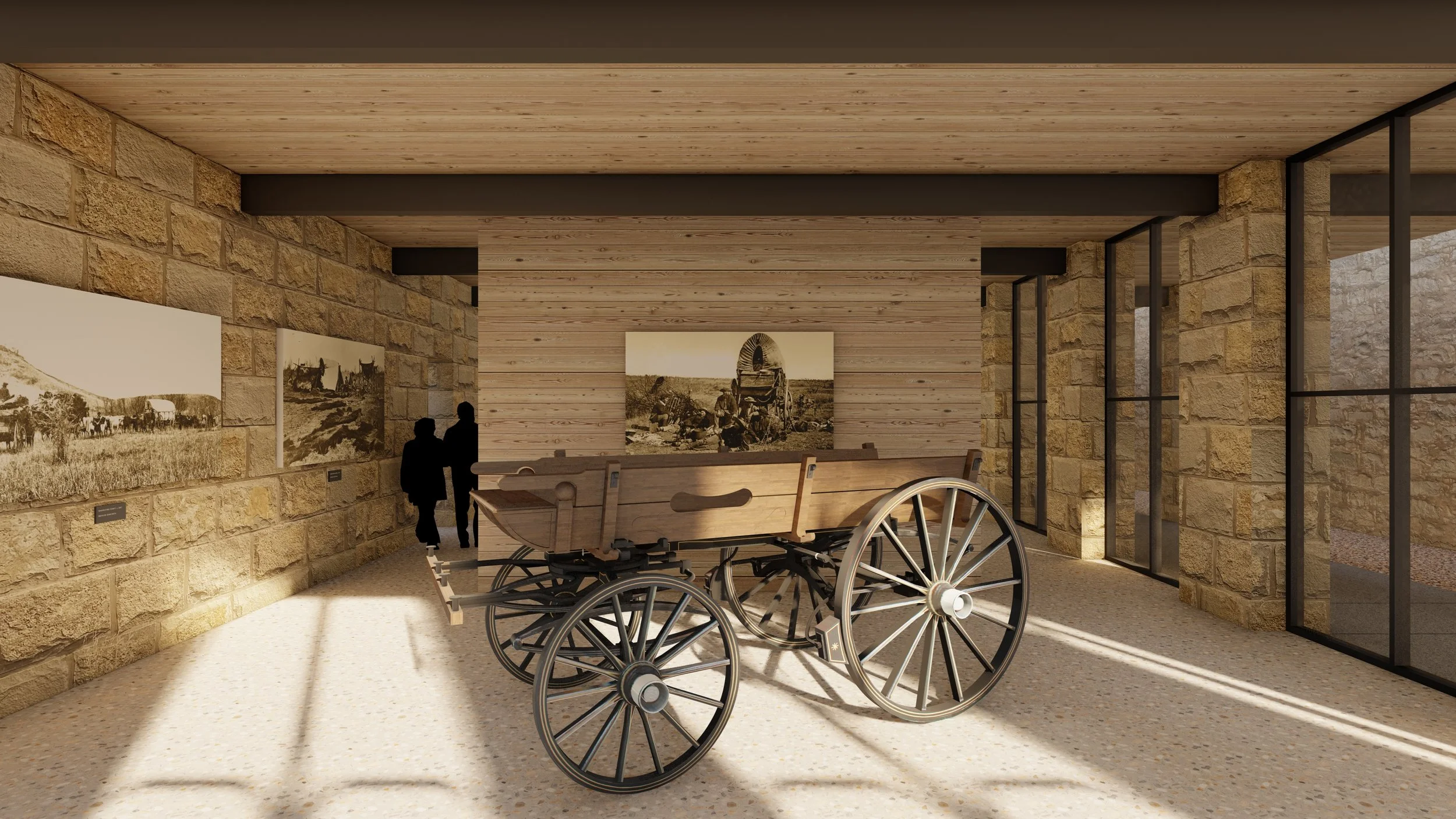
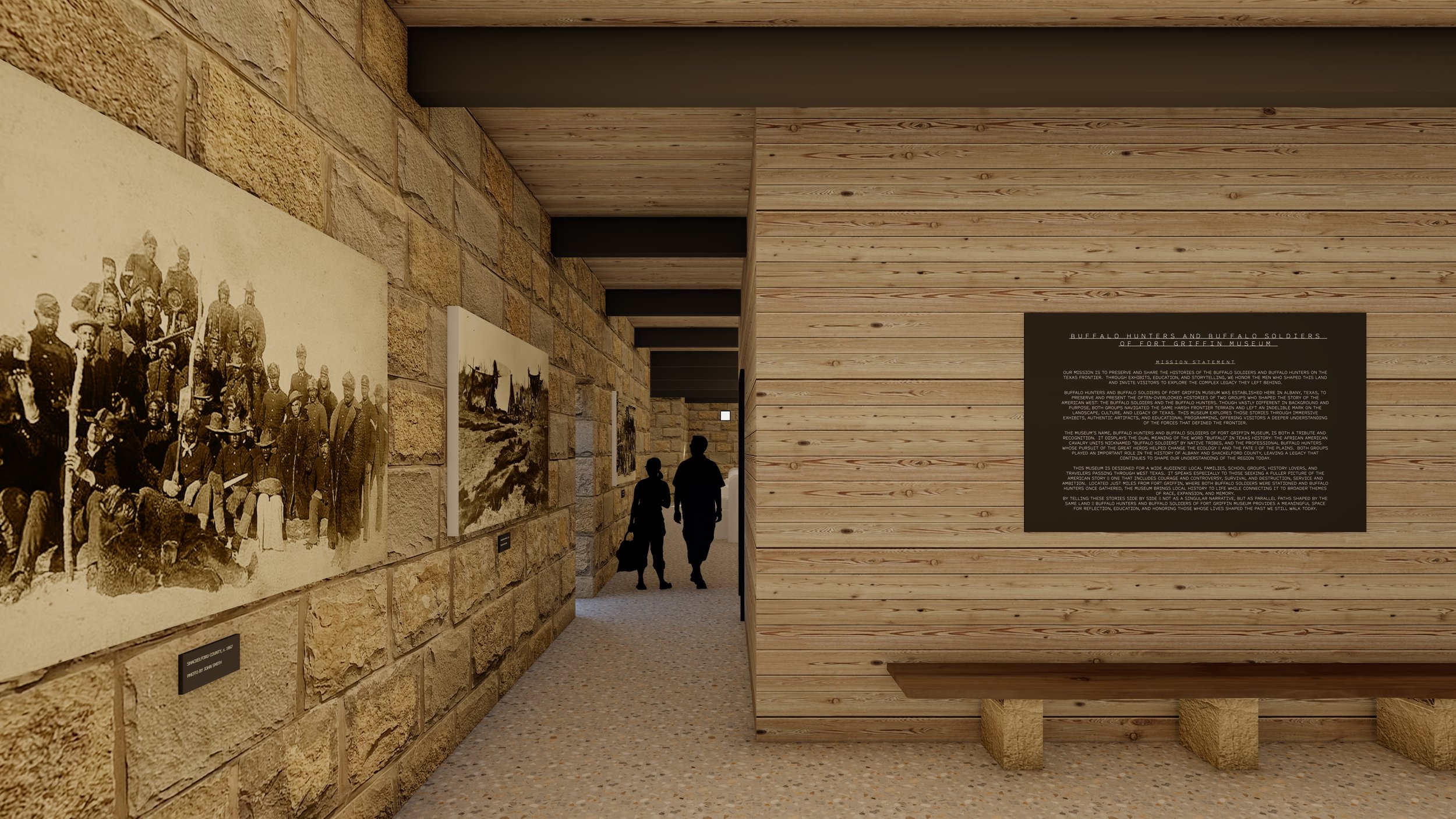
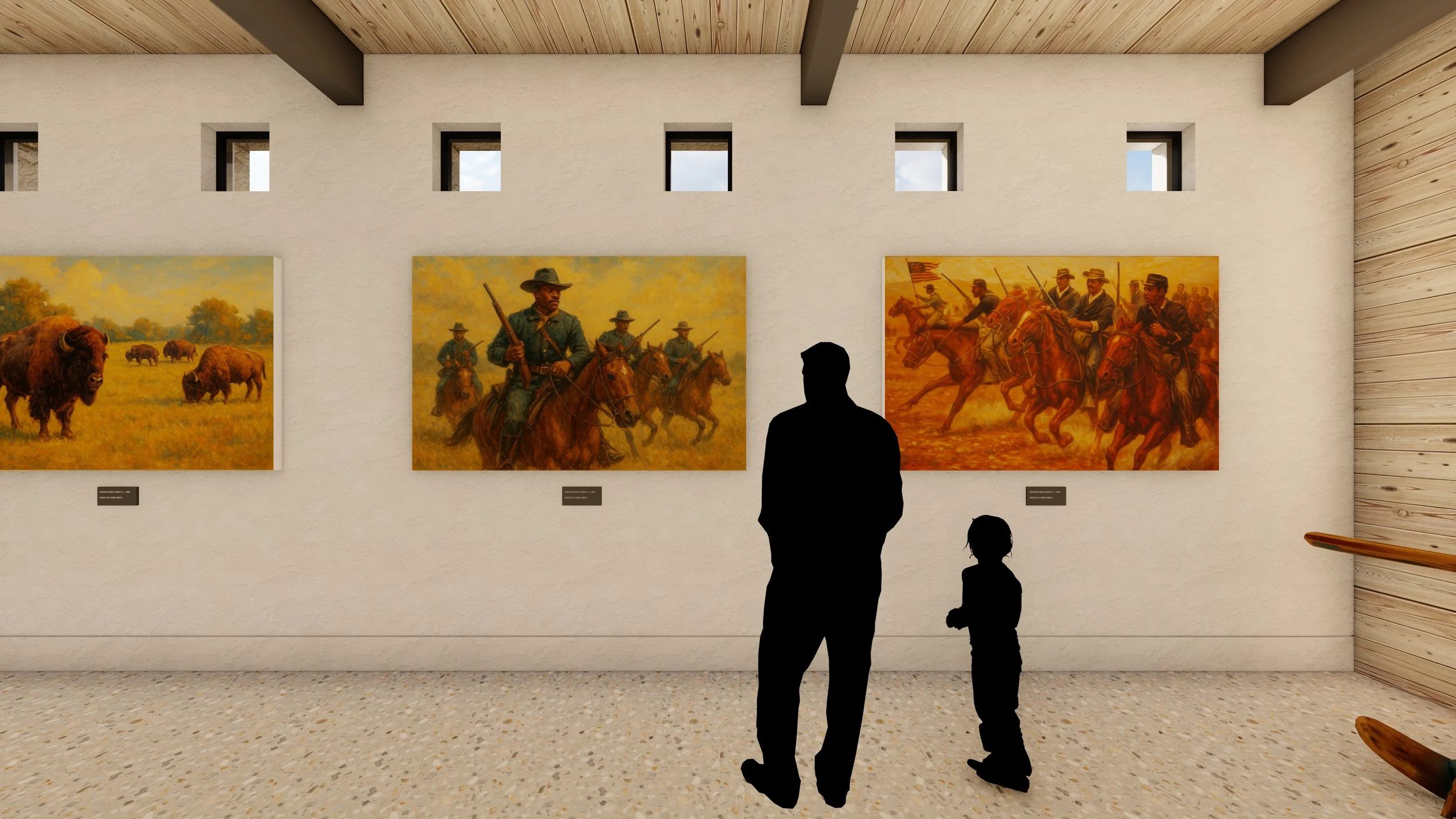
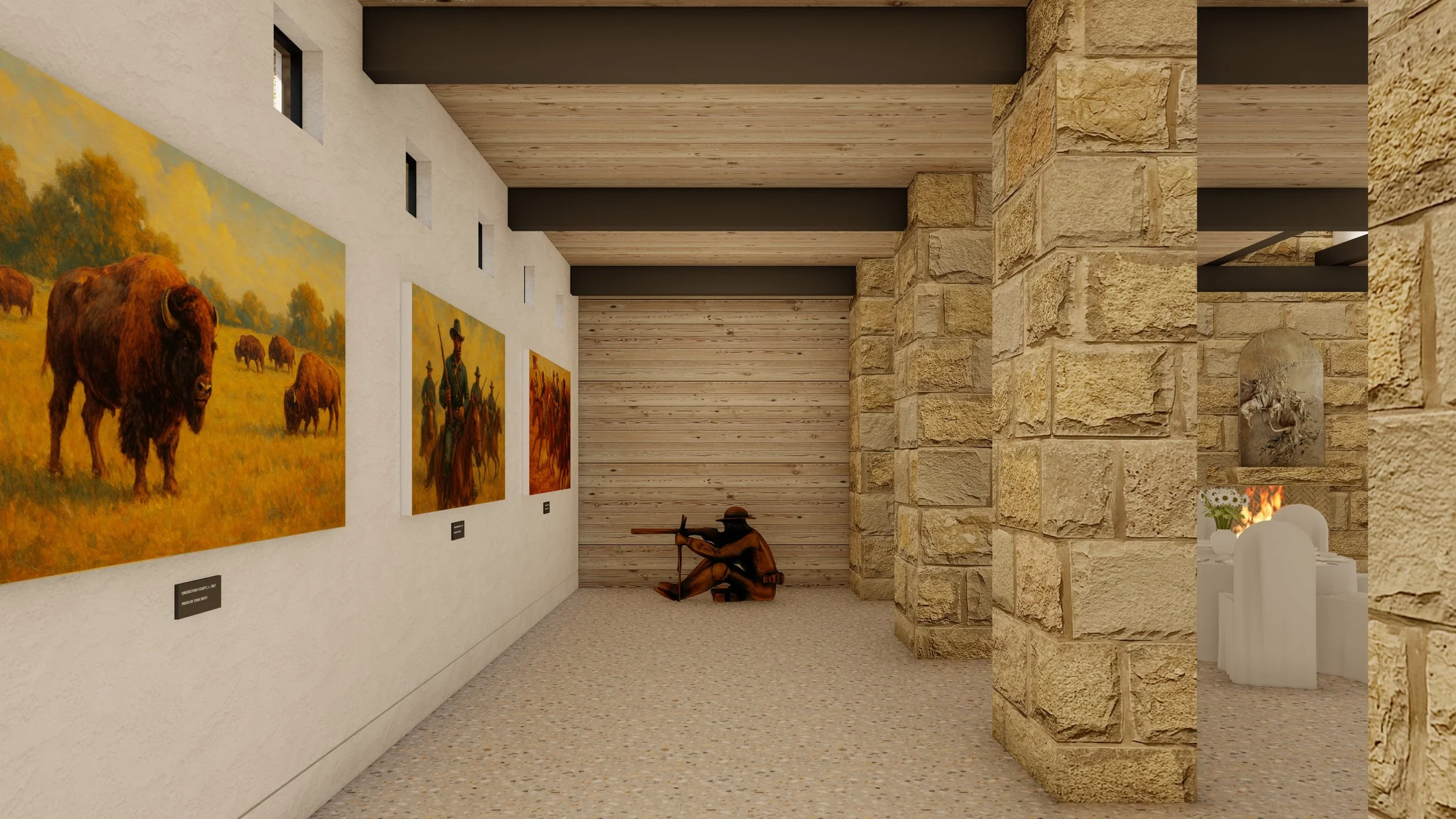
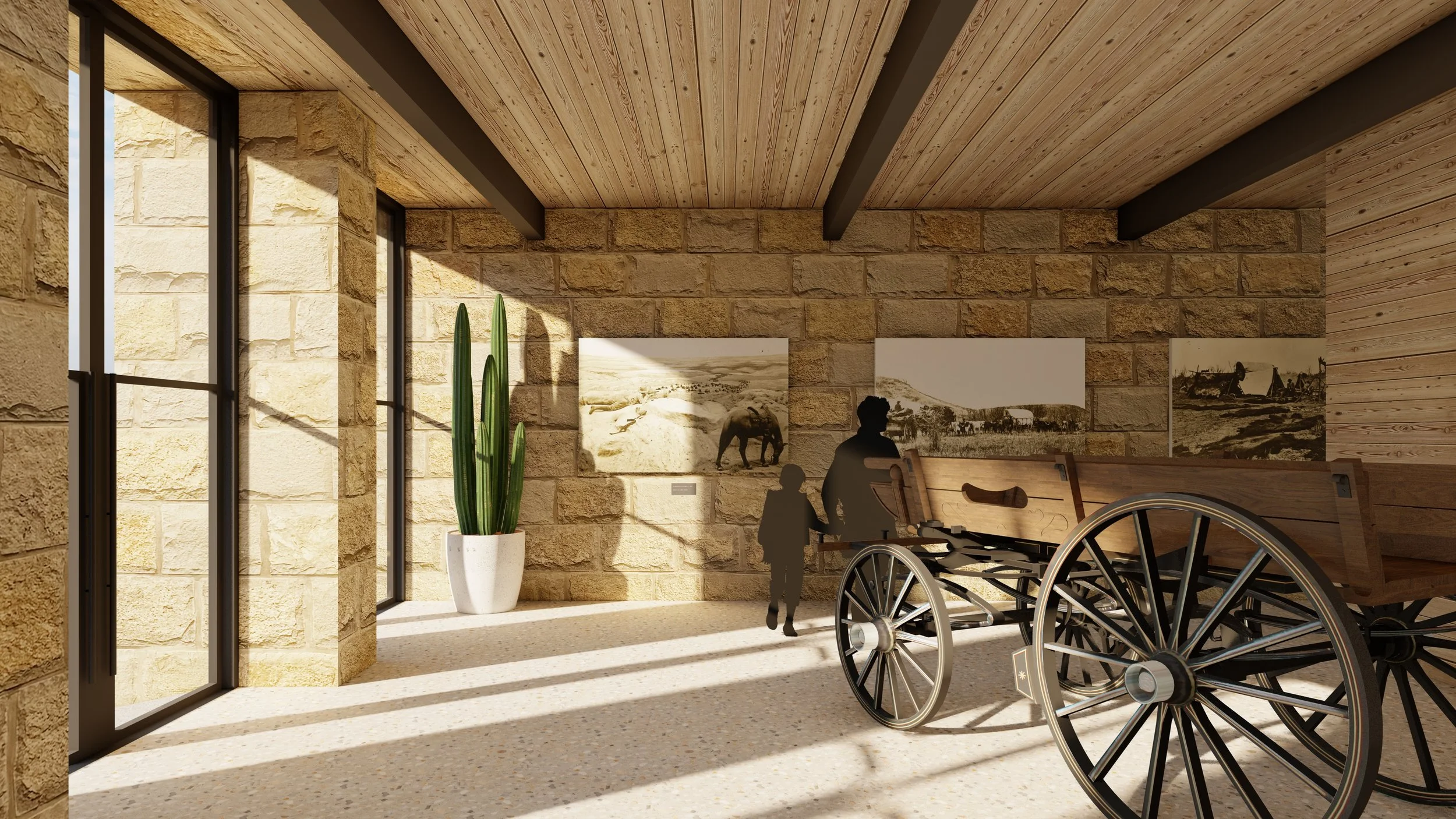
The museum is organized around the parallel stories of the Buffalo Soldiers and buffalo hunters, allowing visitors to explore both narratives within a unified architectural framework. Galleries are carefully arranged to support immersive exhibits, authentic artifacts, and interpretive displays that encourage visitors to examine the people, events, and landscapes that shaped the Texas frontier.
Light, Space, and Orientation
Natural light, proportion, and carefully scaled spaces shape the visitor experience throughout the museum. The sequence of galleries unfolds gradually, balancing intimate moments of reflection with larger exhibition spaces. Framed views, recessed display areas, and clear circulation create an intuitive experience that allows the architecture to quietly support the exhibits rather than compete with them.
A Museum for Community
Beyond its permanent exhibitions, the museum serves as an important civic destination for Albany and the surrounding region. Flexible gallery spaces accommodate rotating exhibits, educational programming, lectures, and community events, ensuring the building remains an active cultural resource for residents, students, and visitors alike.
Preserving the Texas Frontier
The Buffalo Hunters and Buffalo Soldiers of Fort Griffin Museum demonstrates how architecture can preserve history without replicating it. Through thoughtful restraint, authentic materials, and a deep respect for place, the building becomes more than a home for artifacts—it becomes part of Albany's evolving civic fabric. Designed to honor the stories of the Texas frontier while serving future generations, the museum reflects a belief that meaningful architecture can preserve memory, strengthen community, and create places of lasting cultural significance.